Socratic Prompting: 5 Recipes That Ship (2026)
Socratic prompting in 2026: five copy-paste recipes that surface assumptions, self-interrogate in one message, debug by question, and add a maieutic consistency check, plus when to skip it.
Updated on August 20, 2026
On this page
Quick Answer
Socratic prompting means you make the model interrogate a problem with questions before it answers, instead of asking for the answer straight. In 2026 the durable use is not classroom tutoring. It is forcing a model to surface its own assumptions, attack them, and only then commit. Below are five copy-paste recipes, including the maieutic variant that checks its own answer for contradictions. They work on any frontier model. Cost per run is a fraction of a cent.
The idea in one line
Questions beat commands when the failure mode is a confident wrong answer.
A plain instruction gets you the first plausible completion. Socratic prompting adds a step: name what would have to be true, poke it, then answer. You trade a few hundred tokens for fewer silent mistakes.
The research backs the shape. Chang's Socratic-method paper (arXiv, 2023) formalized question-driven prompt templates. Jung et al. went further in the maieutic prompting paper (EMNLP 2022): generate a tree of recursive explanations, then resolve the contradictions between them. It reported up to 20 percent better accuracy on hard true/false reasoning than the prompting baselines of its day. Recipe 4 ships a practical version of that.
Recipe 1: Surface assumptions, then answer
Claim: most bad answers ride on an unstated assumption. Name them first.
Before you answer, list the 3 assumptions your answer would depend on.
For each, mark it Certain, Likely, or Guess.
Then answer the question, and flag any step that rests on a Guess.

Question: {your question}
Why it works: the model cannot hide the shaky premise once it has to grade its own assumptions. You see the Guess before you trust the output.
Failure mode: it will still rationalize. Treat a "Certain" on a fact you cannot verify as a "Likely."
Recipe 2: The self-Socratic loop (one message)
Claim: you do not need a back-and-forth chat. One message can run the whole dialogue.
Answer in three passes, in one reply.
Pass 1 (Draft): answer the question directly.
Pass 2 (Interrogate): ask yourself the 3 hardest questions a domain expert would put to Pass 1. Answer them honestly.
Pass 3 (Revise): rewrite the answer using what Pass 2 exposed. If nothing changed, say why.

Question: {your question}
Why it works: one call, no session state, cheap. The expert-question framing is what pulls it off autopilot.
Failure mode: on a trivial lookup this just burns tokens. See the gate below.
Recipe 3: Socratic debugging
Claim: name the bug class as a question before you paste the stack trace.
I have a bug. Before proposing a fix, ask me the 5 questions
that would most quickly rule out whole categories of cause
(config, versions, state, race, wrong assumption about the API).
Rank them by how much each one narrows the search. Then wait for my answers.
Why it works: it stops the model from guessing a fix for the wrong layer. You answer five sharp questions instead of reading five wrong patches.
Failure mode: if you already know the cause, skip it and just ask for the diff.
Recipe 4: The maieutic upgrade (consistency check)
Claim: a single Socratic pass can still land on a confident wrong answer. Make it check itself for contradictions.
Step 1: Answer the question. Separately, argue the opposite ("make the case it is false").
Step 2: For each side, give the 2 strongest supporting facts.
Step 3: Find any fact both sides rely on but read differently. That is the crux.
Step 4: Resolve the crux with the most verifiable fact, then give the final answer and mark your confidence.

Question: {a true/false or judgment call}
Why it works: this is the shippable core of maieutic prompting, the 2022 paper's method reduced to a single pass. By forcing the model to build the case for AND against, then reconcile, you catch answers that only sound consistent. It shines on judgment calls, not lookups.
Failure mode: it cannot resolve a crux where every fact is itself unverifiable. When that happens the honest output is "undetermined," and you should treat it that way rather than take the more confident half.
Recipe 5: The gate (when NOT to be Socratic)
Claim: Socratic prompting is a cost. Do not pay it for lookups.
If the question is a fact lookup or a formatting task, answer directly.
If it involves a judgment, a plan, or a claim that could be wrong in a costly way,
run the three-pass interrogation first.
Use it for architecture calls, hiring rubrics, risk reads, ambiguous specs. Skip it for "what is the capital of X" and "convert this to JSON." For locking output shape on the direct path, prefill the reply instead. For step-by-step math and derivations, plain chain-of-thought is cheaper and enough.
Tested on


The one failure mode that matters
Socratic prompting can make a wrong answer sound more reasoned, not less wrong. The questions come from the same model that might be wrong. Recipe 4 is the guard: force both sides and reconcile. Without that step you are paying tokens for a more confident mistake.
Cost to test: about $0.01 per question on a mid-tier model. The maieutic pass in Recipe 4 runs roughly 2x that. Still cheaper than shipping the wrong call.
Written by
Roo IyerRoo Iyer writes terse, tested prompt recipes for PromptAttic. No preamble, no hype: the prompt, the receipt, the failure mode.
FAQ
What is Socratic prompting?
Socratic prompting is guiding a model with questions instead of direct commands. You make it surface hidden assumptions, question them, and only then answer. In practice it means adding an interrogation step before the model commits, which reduces confident wrong answers on judgment calls.
How is Socratic prompting different from chain-of-thought?
Chain-of-thought asks the model to show its steps toward one answer. Socratic prompting makes the model question the answer itself: name assumptions, argue the opposite, find the crux, then resolve it. Use chain-of-thought for derivations and math; use Socratic prompting for judgment calls where the risk is a plausible wrong conclusion.
What is maieutic prompting?
Maieutic prompting, from Jung et al. at EMNLP 2022, builds a tree of recursive explanations and resolves the contradictions between them to infer a consistent answer. The paper reported up to 20 percent better accuracy on hard true/false reasoning. Recipe 4 above is a shippable single-prompt version: argue both sides, find the crux, reconcile.
Does Socratic prompting work on Claude and GPT?
Yes. Both Claude and GPT follow a question-first structure without special settings, because it is just instructions in the prompt. Phrasing differs slightly per model, so check each vendor's prompting docs, but the recipes here run on any frontier model.
When should you not use Socratic prompting?
Skip it for fact lookups and formatting tasks. The interrogation step costs tokens and latency, and on a simple lookup it adds nothing. Reserve it for judgments, plans, and claims that would be expensive to get wrong. Recipe 5 is the gate that decides.
Does Socratic prompting reduce hallucinations?
It can, but only if you add a consistency check. A single Socratic pass can still rationalize a wrong premise. The maieutic variant in Recipe 4 forces the model to build the case for and against, then reconcile, which catches answers that merely sound consistent. Without that guard, question-driven prompting can make a wrong answer sound more reasoned.
Related recipes
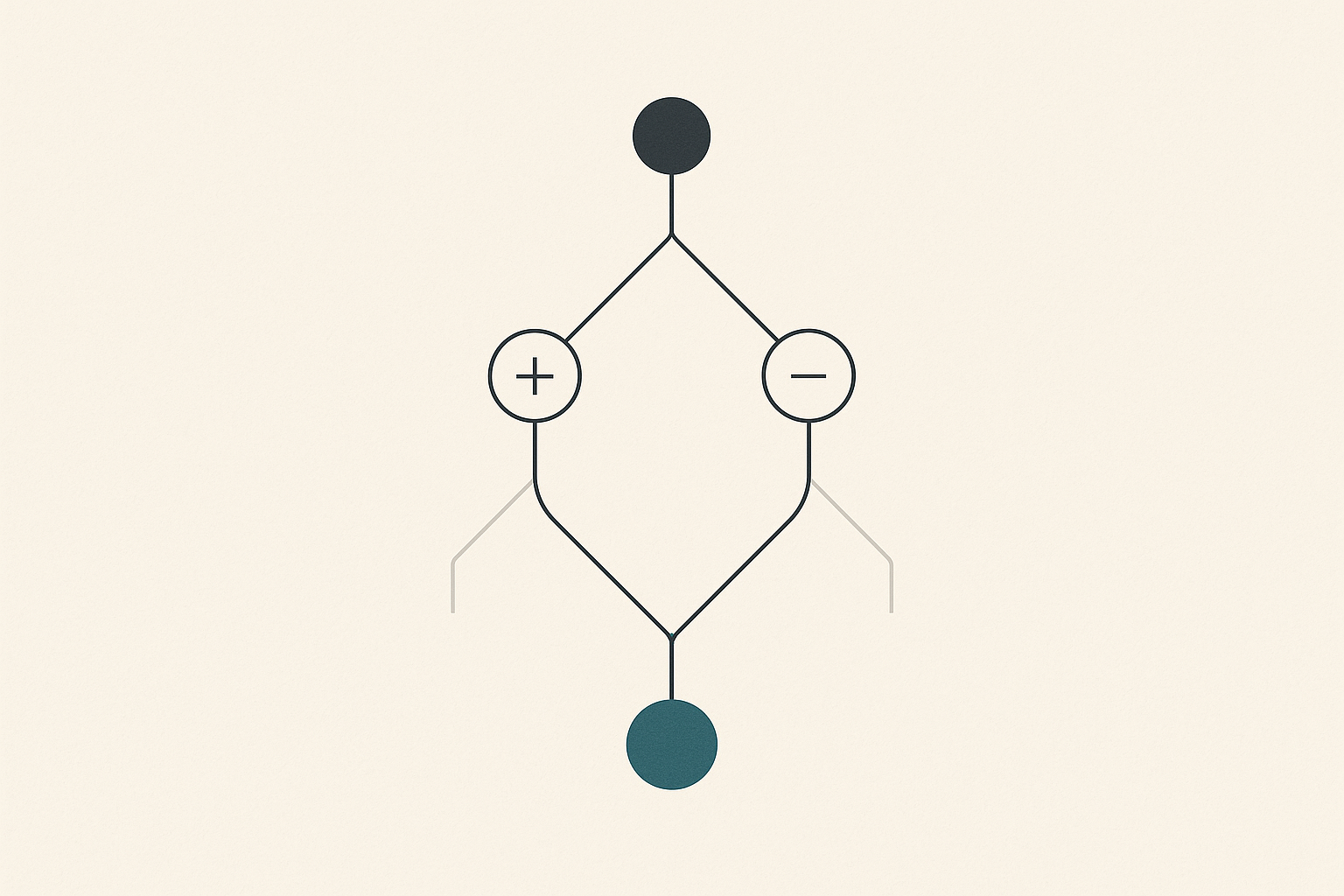
Maieutic Prompting: 4 Recipes That Ship (2026)
Maieutic prompting makes a model argue both sides, then keeps only the explanations that survive. What the 2022 paper really does, the scope it covers, and 4 copy-paste recipes.
Assistant Prefill on Claude: 4 Recipes That Ship (2026)
Assistant prefill in 2026: four copy-paste recipes that force JSON, kill the preamble, lock the output shape, and hold a persona, plus where prefill breaks.
Chain of Thought Prompting: 6 Examples That Ship (2026)
Six paste-ready chain of thought prompting examples for 2026, each with its failure mode, plus when reasoning out loud makes the answer worse.