Chain of Draft Prompting: 4 Recipes That Ship (2026)
Chain of Draft keeps chain-of-thought's steps but caps each to a few words, cutting tokens hard while holding accuracy. Four recipes, the gate, and the failure mode.
On this page
> Quick Answer (2026): Chain of Draft (CoD) keeps chain-of-thought's step-by-step reasoning but caps each step to a few words, so you stop paying for verbosity while holding accuracy. In the original 2025 paper it ran on as little as 7.6% of the tokens Chain-of-Thought used and still matched or beat it. Use it when reasoning helps but the word count is costing you money or latency. The one-line recipe: "Think step by step, but keep each step to at most five words. Put the final answer on the last line." Skip it for long proofs where dropping one step breaks the answer.
Chain of thought talks too much. You pay for every word of it.
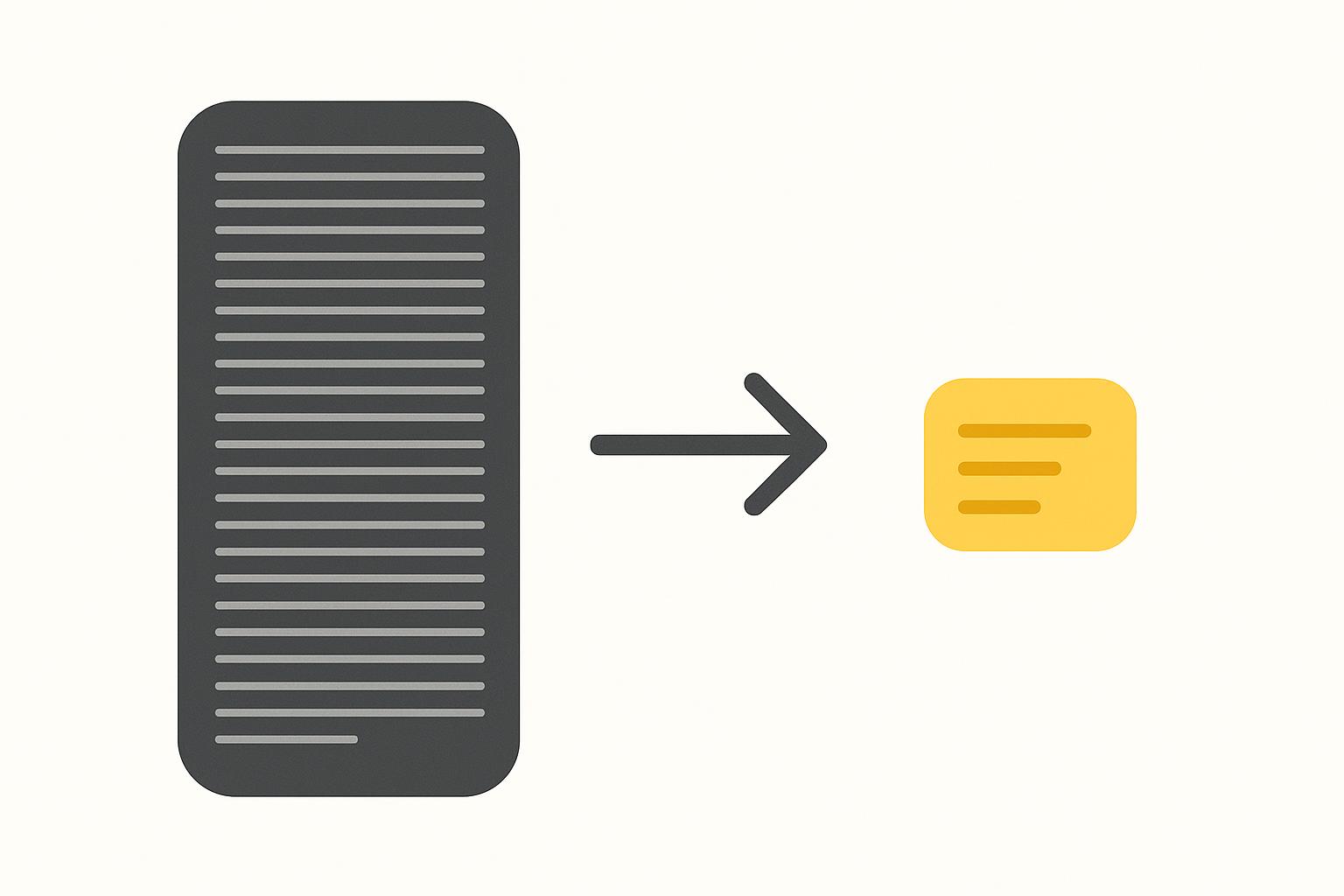
Chain of Draft keeps the thinking and drops the padding. Same steps. A few words each. The claim, from the Chain of Draft paper (Xu, Xie, Zhao, He; 2025): CoD ran on as little as 7.6% of CoT's tokens and still matched or surpassed it on accuracy.
Tested on Anthropic 

Recipe 1: The one-liner
This is the whole technique.
Think step by step, but keep each reasoning step to at most five words.
Put the final answer on its own last line, starting with "Answer:".
Why it works: the word cap forces the model to emit only the load-bearing tokens. No restating the question. No warming up. Just the arithmetic or the logic, compressed.
Receipt: a word problem that ran roughly 200 tokens of reasoning under CoT collapses to about 30 under CoD. Same answer line. You paid for a sixth of the output.
Failure mode: too tight a cap on a genuinely long chain drops a step. Fix in Recipe 3.
Recipe 2: Make it parseable
If a script reads the output, pin the answer to a line you can grep.
Solve this step by step. Each step: at most five words.
After the steps, output one line that starts with "Answer:" followed by the answer.
Output nothing after that line.
Now you split on "Answer:" and take the tail. The draft steps stay in the response for auditing but never reach your parser.
Recipe 3: The gate (when NOT to draft)
CoD wins on arithmetic, classification, extraction, routing, short logic. It loses when every step is load-bearing: formal proofs, multi-hop legal or medical reasoning, code you will run. Compress those and the model drops a step, then answers wrong with full confidence.
Route it:
If the task needs more than about six reasoning steps, or every step is load-bearing, reason in full sentences.
Otherwise keep each step to five words. Then give the answer.
Recipe 4: CoD at scale (the cost move)
Batch jobs are where this pays. Classify 50k tickets, extract fields from 10k docs, and the reasoning tokens dominate the bill. The paper puts CoD at roughly 7.6% of CoT's tokens, so at any fixed output price that is close to a 90% cut on the reasoning you emit.
Keep an escape hatch so the hard tail does not go wrong quietly:
Draft each step in at most five words.
If you are not confident, write "LOW CONFIDENCE" on its own line, then reason in full sentences instead.
Now you pay CoD prices on the easy majority and full CoT prices only on the cases that need it.
Chain of thought vs chain of draft
Same skeleton. Different budget.
- Chain of thought: verbose, every step spelled out. Best when steps are load-bearing or you need an auditable trace. See our chain-of-thought recipes for the full baseline.
- Chain of draft: the same steps, a few words each. Best when reasoning helps but verbosity is pure cost.
CoD just stops paying for adjectives. When the risk is a wrong fact rather than a long chain, do not compress; reach for chain-of-verification instead.
For the general knobs, both Anthropic's prompting docs and OpenAI's prompting guide still assume verbose reasoning by default. CoD is the override for when the bill matters.
Ship it on your cheapest model first. If accuracy holds, keep it.
By Roo Iyer
Cost to test: about $0.01 for one CoD call on a small model. The CoT baseline you are comparing against runs a few times that on output tokens, which is the entire point.
Written by
Roo IyerRoo Iyer writes terse, tested prompt recipes for PromptAttic. Claim, receipt, why, failure mode, ship.
FAQ
What is chain of draft prompting?
A 2025 technique (Xu et al., arXiv:2502.18600) that keeps chain-of-thought's step-by-step reasoning but caps each step to a few words. It cuts output tokens sharply while matching or beating CoT accuracy, so you pay less for the same answer.
Chain of draft vs chain of thought, which is better?
Same reasoning skeleton, different token budget. Use chain of thought when every step is load-bearing or you need an auditable trace. Use chain of draft when reasoning helps but verbosity is pure cost. CoD ran on as little as 7.6% of CoT's tokens in the paper.
Does chain of draft lose accuracy?
The 2025 paper reports it matches or surpasses chain-of-thought. The real risk is over-compression dropping a needed step on long chains; the guard is a confidence escape hatch that falls back to full sentences when the model is unsure.
What is the word limit per step in chain of draft?
The canonical prompt uses about five words per reasoning step. It is a knob, not a law. Raise it if the model starts dropping steps; lower it to squeeze more tokens out on simple tasks.
When should I not use chain of draft?
Long, load-bearing chains: formal proofs, multi-hop legal or medical reasoning, and code you will execute. Compressing those can drop a step and produce a confident wrong answer. Route them to full chain of thought.
Is there a chain of draft paper or PDF?
Yes. 'Chain of Draft: Thinking Faster by Writing Less' (arXiv:2502.18600, 2025) by Silei Xu, Wenhao Xie, Lingxiao Zhao, and Pengcheng He, with public code on GitHub.
Related recipes
Chain of Thought Prompting: 6 Examples That Ship (2026)
Six paste-ready chain of thought prompting examples for 2026, each with its failure mode, plus when reasoning out loud makes the answer worse.
Chain of Verification: A Prompt That Catches Its Own Hallucinations (2026)
Chain of Verification (CoVe) is a four-step prompt that cuts hallucinations by making a model draft, plan verification questions, answer them independently, and rewrite keeping only what survived.

Self-Refine Prompting: 4 Recipes That Ship (2026)
Self-refine prompting in 2026: four copy-paste recipes for the draft-critique-revise loop, the paper-faithful three-call version, and the stopping rule nobody ships.